Miles Don't Lie: The Van Maintenance Milestones Most Full-Timers Are Quietly Skipping
Here's a number worth sitting with: the average American drives about 15,000 miles per year. A full-time van lifer? Often double that, sometimes more. And unlike a daily commuter that sits in a garage twelve hours a day, a converted van is running its electrical system, heating equipment, water pump, and ventilation fan around the clock — even when it's parked.
The math on wear is completely different. Which means the maintenance schedule has to be different too.
Most van owners are working from the factory service manual, which was written for a cargo van making deliveries — not a full-time residence covering 30,000 miles a year with 200 pounds of lithium batteries, a diesel heater, and a rooftop solar array adding load to the chassis. That mismatch between how the manual was written and how the van is actually being used is where expensive surprises are born.
Let's break it down by mileage.
The 50,000-Mile Mark: Small Things That Become Big Problems
Most van lifers hit 50K without too much drama, especially if they're doing basic oil changes and tire rotations. But this is the mileage range where a few things deserve closer attention than they'd get on a standard vehicle.
Brake inspection beyond the basics. Full-time vans carry more weight than the factory spec assumed. Add a water tank, a battery bank, a full kitchen build, and personal gear, and you're regularly running at or near payload capacity. Brakes wear faster under sustained load. At 50K, have a shop measure pad thickness and rotor condition — don't just eyeball it.
Roof penetrations and sealant. This one has nothing to do with the engine and everything to do with your build. Every fan, solar cable, or vent that goes through the roof needs its sealant inspected annually at minimum. By 50K miles, you've driven through enough temperature swings, rain events, and road vibration to start seeing sealant failures. Catch them here and you're caulking for twenty minutes. Miss them and you're dealing with water intrusion, delaminating walls, and potential mold remediation.
Auxiliary battery system check. Lithium batteries are remarkably durable, but the connections, bus bars, and wiring that feed them take a beating from road vibration. At 50K, inspect every terminal for corrosion or looseness. Check your battery management system readings against a known reference. This is also a good time to verify that your shore power and solar charging are functioning as designed.
Spark plugs and air filter (gasoline engines). Factory intervals are often 60K, but again — you're not a factory-spec user. If you're frequently idling to run a diesel heater or charge batteries via the alternator, your engine is working harder than the interval assumes.
The 100,000-Mile Mark: The Expensive-If-You-Skip Zone
A hundred thousand miles is where deferred maintenance stops being theoretical and starts showing up as repair bills. This is also the mileage range where a lot of used van buyers are shopping, so if you're considering selling, the condition of these systems matters.
Timing belt or chain service. This varies by engine, but if your van uses a timing belt (check your manual — many Transits and Sprinters use chains, but not all), 100K is often the replacement window. A timing belt failure is not a warning-light situation. It's a catastrophic engine failure, often with no advance notice. The belt itself isn't expensive. The engine rebuild after it snaps is.
Coolant flush and thermostat. Coolant degrades over time and mileage, losing its corrosion-inhibiting properties. A full flush and refill at 100K is cheap insurance against water pump failure and coolant system corrosion. Replace the thermostat while you're in there — it's a few dollars and an hour of labor that prevents a much worse situation.
Transmission service. If you're towing, climbing grades, or regularly running at high load — all common van life scenarios — your transmission fluid is working harder than the factory interval assumes. At 100K, a fluid change and filter inspection is worth doing regardless of what the manual says.
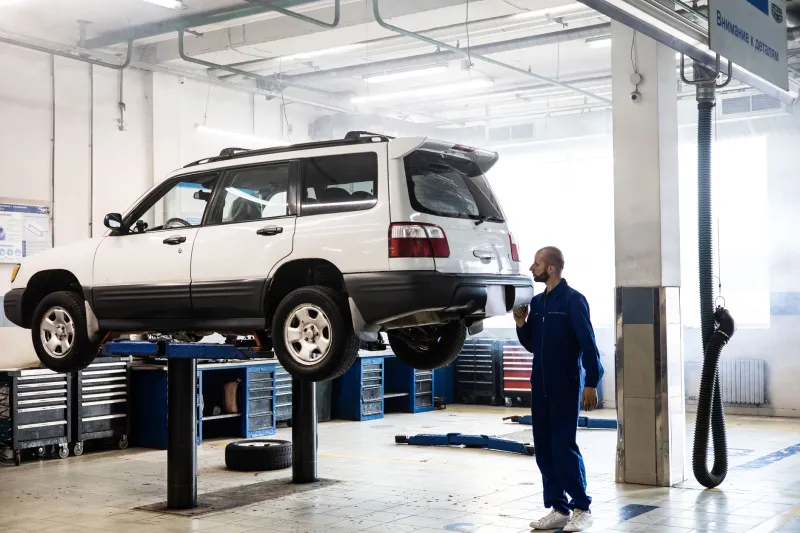
Suspension components. Ball joints, tie rod ends, and control arm bushings all have finite lives. At 100K on a loaded van, have a front-end inspection done by someone who'll put it on a lift and physically check for play — not just a visual from underneath. Worn suspension components affect handling, tire wear, and eventually safety.
Diesel heater service. If you're running a Webasto, Espar, or aftermarket Chinese diesel heater, 100K miles of road vibration means it's time for a full service: glow plug inspection, fuel pump check, combustion chamber cleaning. These heaters are reliable, but they're not maintenance-free.
The 200,000-Mile Mark: Where Full-Timers Actually Live
This is the territory most automotive content ignores, because most car owners never get here. Van lifers often do — especially those who bought high-mileage rigs to start with.
Engine seals and gaskets. By 200K, you may be seeing minor oil seepage from valve cover gaskets, rear main seals, or oil pan gaskets. Minor seepage is often manageable; active leaks are not. At this mileage, budget for seal work and don't be surprised when your mechanic finds more than one item that needs attention.
Water pump replacement. If it hasn't been done, now's the time. Water pumps don't give much warning before failure, and a failed water pump means an overheated engine, which means a very bad day in a very inconvenient place.
Fuel injector cleaning or replacement. Two hundred thousand miles of fuel flow leaves deposits. A professional cleaning service can restore fuel economy and smooth out rough idle. If you're seeing significant power loss or hard starts, a more thorough inspection of the injection system is warranted.
Full electrical system audit. By this mileage, the factory wiring harness has been exposed to years of heat cycles, vibration, and — in a converted van — the additional draw of aftermarket electrical systems. Have a qualified auto electrician inspect the harness for chafing, brittle insulation, and any signs of overloaded circuits. This is especially important if you've added significant electrical load after the original factory configuration.
The Cost of Waiting vs. The Cost of Doing
The pattern is consistent across every one of these service points: the preventive work costs a fraction of the repair it prevents. A timing belt service might run $400–$800 depending on the vehicle. A timing belt failure can result in a $4,000–$8,000 engine repair or replacement — and that's before you factor in the tow, the rental car, and the weeks of downtime while you wait for parts.
For full-time van lifers, downtime isn't just an inconvenience. It's a disruption to your home, your income, and your entire operating model. The van that stays on the road is always cheaper than the one that gets towed.
Keep a maintenance log. Note every service with the date and mileage. Not just for your own reference — for resale value, for insurance purposes, and for the peace of mind that comes from knowing exactly what's been done and what's coming up next.
The road will take you wherever you want to go. But only if you take care of the thing that gets you there.