Built to Look Good Online, Hard to Sell in Real Life: Van Customizations That Hurt Your Resale

Photo by Photo by Leo_Visions on Unsplash on Unsplash
Pull up any van build tag on Instagram and you'll find the same aesthetic signatures: moody dark interiors with Edison bulb lighting, bold color-blocked cabinetry, macramé accents, hand-lettered quotes stenciled on walls, and enough live-edge wood to stock a small lumber yard. These builds get tens of thousands of likes. They inspire entire comment sections of "this is my dream."
Then they hit the used market and sit for four months.
The gap between what photographs beautifully and what actual buyers want to hand over real money for is one of the most consistent — and most expensive — lessons in the van conversion world. If you're building a van purely for yourself with zero intention of ever selling, design away. But if there's any chance you'll want to recoup your investment down the road, the choices you make during the build matter enormously.
We talked to used van dealers and experienced flippers across the country to understand exactly where builders leave money on the table.
The Audience Problem: Who Actually Buys Used Custom Vans
Here's the fundamental disconnect. The people who engage most enthusiastically with van build content online are largely aspirational — they're dreaming, researching, imagining themselves in that space. The people who actually buy used custom vans are a much narrower group: pragmatic buyers who want functional, livable space and who view heavy personalization as work they'll have to undo.
"Most of my buyers aren't coming from Instagram," says one dealer who specializes in pre-owned conversions in the Southwest. "They're people who've done their research, have a realistic budget, and want something move-in ready. When they see a build that's heavily stylized, their first question is always 'how much is it going to cost me to change this?' That question kills deals."
The used van buyer pool is also more diverse than the content-creation community tends to acknowledge. Tradespeople converting vans for mobile work setups. Families doing extended road trips. Retirees trying out nomadic living. None of these buyers are looking for the same aesthetic that performs well on a lifestyle feed.
The Specific Customizations That Consistently Tank Value
Polarizing color schemes, inside and out. Exterior wraps and paint jobs in unusual colors — forest green, terracotta, matte black, two-tone combinations — are a double liability. They appeal to a narrow slice of buyers, and they signal to everyone else that the van has been heavily modified, which raises questions about what else might have been done. Interior color choices matter too. Deep jewel tones, all-black interiors, and high-contrast paint combinations look dramatic in photos but make spaces feel smaller in person and are difficult to update cheaply.
Trendy finishes that date fast. Shiplap, subway tile, and reclaimed barn wood were everywhere in van builds circa 2019-2021. They're not bad materials, but they carry a timestamp now. Buyers looking at a heavily shiplapped interior in 2025 aren't seeing "cozy" — they're seeing "dated," which translates to a lower offer. The same will eventually be true for whatever finish is trending right now.
Murals and custom artwork. Hand-painted interior murals are genuinely impressive as craft. As resale assets, they're essentially worthless — and actively harmful if the buyer's taste differs from the artist's. One flipper in the Pacific Northwest described spending $400 and a full weekend painting over a detailed forest scene that had been the centerpiece of a build's social media presence. "It was beautiful. I painted over every inch of it because no buyer was going to pay a premium for someone else's vision."
Fixed beds positioned awkwardly. This one crosses from aesthetics into function, but it's worth including because it's such a common build decision driven by photo appeal rather than livability. A lengthwise fixed bed looks great in a wide-angle shot and is terrible for anyone taller than 5'8" in a standard-width van. Buyers notice immediately, and it's an expensive fix.
Excessive open shelving. Open gear walls and floating shelves photograph beautifully and work fine when you're the person who built and organized the space. For a new buyer, they communicate clutter and require complete reorganization. Closed cabinet storage with clean faces is almost universally preferred by used buyers and requires no imagination to visualize.
What Actually Holds (or Adds) Value
The good news is that building for resale doesn't mean building something generic and joyless. It means understanding which investments translate to buyer confidence and which ones don't.
Quality mechanical and electrical work. A well-documented 200Ah lithium system with a quality inverter and clean wiring adds real, quantifiable value. Buyers can understand it, verify it, and trust it. This is where your budget should concentrate.
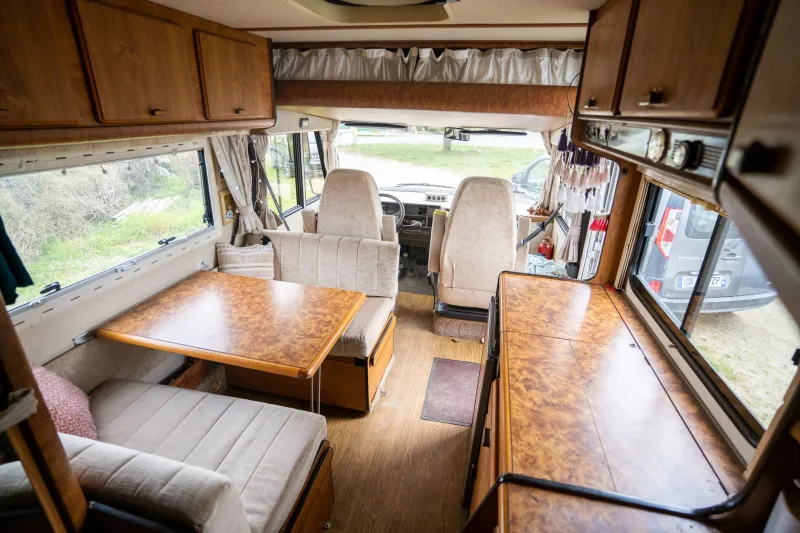
Neutral, warm interior palettes. Light wood tones, white or off-white walls, and natural materials read as clean and spacious rather than personalized. They're a blank canvas that buyers can mentally inhabit, which is exactly what you want them doing during a showing.
Functional, flexible layouts. Convertible sleeping arrangements, modular furniture that can be reconfigured, and layouts that accommodate different use cases appeal to a broader buyer pool than hyper-optimized single-use designs.
Proper insulation and ventilation. These are invisible in photos but immediately apparent to any experienced buyer who asks the right questions. A Sprinter with quality Thinsulate insulation and a Maxxair or Fan-Tastic fan properly installed is worth more than an identical van with gorgeous cabinetry and questionable thermal performance.
The Budget Framework
A useful mental model: allocate your conversion budget in thirds. One third to mechanical and electrical systems (the stuff that works). One third to structural and functional build elements (insulation, flooring, cabinetry bones). One third to finishes and personalization — and within that final third, ask yourself honestly how much of each choice is for you versus for the camera.
That last question isn't a judgment. It's just good financial hygiene. The van you build should make you happy to live in. It should also be something a reasonable stranger could imagine living in too — because someday, that stranger is going to be your buyer.
The road will eventually end for every van. Build for both the journey and the exit.