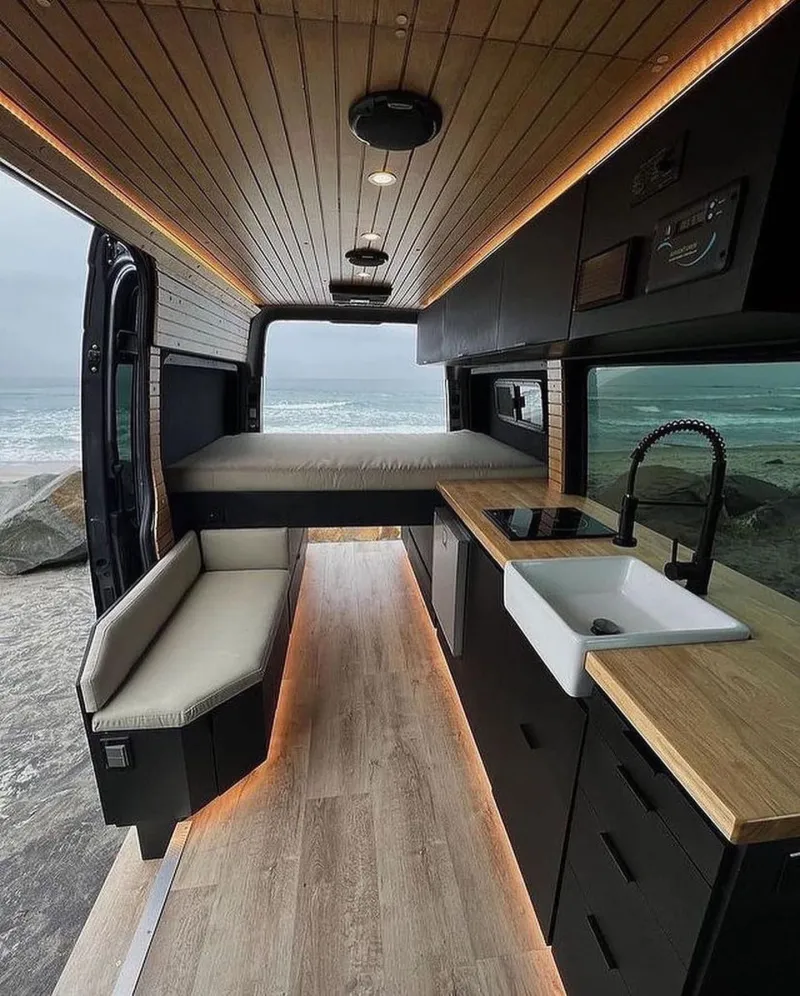
Before You Drive Into the Desert, Ask Yourself If Your Van Is Actually Ready For It

Photo: camper van parked scenic desert mountains landscape USA, via thumbs.dreamstime.com
The Terrain Question Everyone Gets Backwards
Most people start with a destination. They see a photo of a van parked at the edge of a canyon in Moab, or tucked into a pine forest in the Cascades, and they think: that's where I want to go. Then they build or buy a van and head there.
That's backwards.
The smarter move—and the one that leads to fewer roadside emergencies—is to start with what your van can actually handle and build your travel plans around that reality. Terrain is not just scenery. It's a set of demands on your vehicle's mechanical systems, your electrical setup, your water storage, and your tires. When those demands match your build, van life is everything people say it is. When they don't, it gets expensive fast.
Let's break down the three most popular van life landscapes in the US and talk honestly about what each one requires.
The Desert: Hot, Dry, and Unforgiving
The American Southwest draws more van lifers than probably any other region. Sedona, Joshua Tree, Big Bend, the Sonoran—these are iconic destinations with dramatic light and cheap (or free) dispersed camping. It's easy to see the appeal.
But the desert is hard on vehicles in ways that aren't immediately obvious.
Heat is the primary villain. Temperatures regularly exceed 100°F in summer, and interiors can hit 130°F or more when parked. That's not just uncomfortable—it's actively dangerous to your lithium batteries, which have recommended operating temperature limits that many people ignore until a battery management system shuts them down at the worst possible moment. If desert travel is your primary use case, AGM batteries are more heat-tolerant, or you'll need to be strategic about ventilation and shade.
Cooling is a real challenge. Unless you have a compressor-based air conditioning system (which is a significant electrical draw), staying cool in the desert means parking in shade that doesn't exist, running your fan constantly, and accepting that midday in July is not van time. Many desert-focused van lifers flip to a nocturnal schedule in summer—cool nights, early mornings, shade through the peak heat.
Dust and sand infiltrate everything. A van that isn't well-sealed will accumulate fine desert dust in every cabinet, every drawer, and every electronic component. Pay attention to weatherstripping and avoid leaving windows cracked in dusty conditions.
What thrives here: High-roof vans with strong ventilation (a quality two-speed fan like a Maxxair or Fan-Tastic makes a massive difference), robust solar setups (you'll have no shortage of sun), and vehicles with reliable cooling systems. A Transit or Sprinter with a recent coolant flush and a functioning AC compressor is a solid desert rig. Ground clearance matters less on most maintained desert roads, but if you're chasing remote BLM land, a two-inch lift and all-terrain tires will open up a lot more options.
The Mountains: Beautiful, Brutal, and Altitude-Sensitive
Colorado, Montana, the Sierra Nevada, the Cascades—mountain van life has a romanticism that's completely justified. Wildflowers, elk, stargazing at 10,000 feet. It's genuinely extraordinary.
It also puts your van through a serious workout.
High-altitude driving strains naturally aspirated engines. If you're in an older van without a turbocharged engine, expect a noticeable power drop above 8,000 feet. Modern turbodiesels (like those in newer Sprinters) handle altitude better, but even they aren't immune. Plan for slower climbs and more frequent downshifting on steep grades.
Winter mountain travel is a different category entirely. Snow-packed passes require all-season or winter tires at minimum, and ideally all-wheel drive or 4WD capability. The Mercedes-Benz Sprinter 4x4 and the Ford Transit AWD were practically designed for this use case. Rear-wheel drive vans on icy mountain roads are a liability.
Temperature swings are dramatic. A sunny afternoon at 9,000 feet can drop to freezing by midnight. Your heating system needs to be dependable. A diesel heater (Webasto, Espar, or the more budget-friendly Vevor units) is far more reliable in cold mountain conditions than propane, which loses pressure in the cold.
What thrives here: Four-wheel or all-wheel drive vans with quality winter tires, a reliable diesel heater, and good insulation. Vans with extra water storage also fare better in the mountains, where dispersed camping can take you far from fill-up points. A ProMaster 4x4 conversion or a Sprinter 4x4 is the mountain van archetype for good reason.
The Coast: Mild, Damp, and Corrosive
The Pacific Coast Highway, the Olympic Peninsula, Maine's rocky shoreline—coastal van life trades dramatic temperature extremes for something subtler and, in some ways, more insidious: moisture.
Salt air and humidity are long-term threats. Coastal environments accelerate rust on exposed metal, corrode electrical connections, and create persistent condensation problems inside poorly insulated vans. If you're planning extended coastal travel, the quality of your insulation and vapor barrier matters more than almost anywhere else. Spray foam done right significantly reduces condensation. A van with poor insulation will feel like the inside of a wet sleeping bag on a foggy morning.
The roads are gentler. Most coastal routes are paved and well-maintained, which means ground clearance is less of a priority. You don't need a lifted all-terrain rig to drive PCH. This is actually good news for standard-height vans that might struggle in the mountains or on rough desert two-tracks.
Weather windows are unpredictable. The Pacific Northwest coast, in particular, can deliver rain for days or weeks at a stretch. Your solar system won't save you here—a shore power hookup capability or a quality DC-to-DC charger that works off your alternator becomes more important. Some coastal van lifers keep a small generator for extended overcast stretches.
What thrives here: Well-insulated vans with strong moisture management, alternator charging setups, and reliable propane or diesel cooking options that don't depend on solar. A standard-height Transit or Promaster with quality insulation and a rust-prevention treatment on the undercarriage is a natural coastal rig.
The Real Lesson: Know Your Van Before You Plan Your Route
None of this means you're locked into one type of terrain forever. Plenty of van lifers spend summers in the mountains and winters on the coast or in the desert, adjusting their systems and habits accordingly. The key is going in with eyes open.
Talk to your van honestly. What does it have? What does it lack? A two-wheel drive van with street tires and a small battery bank isn't going to thrive on a remote mountain road in November, no matter how good the photos look. But that same van, parked on a coastal bluff with a good fan and a warm blanket, might be exactly right.
The road doesn't care about your Instagram aesthetic. It cares about your tires, your engine, and your preparation. Match those to your terrain, and the adventure takes care of itself.